The Poison Bird Drill: Building Handling Off Strong Scent Temptations
Hello retriever enthusiasts,
Yesterday we ran a poison bird drill to teach the dogs to handle off a strong, tempting scent distraction. This is an advanced exercise that forces the dog to ignore a highly scented "poison" bird and commit to the handler’s line to the blind. It builds resistance to scent pulls — a skill that is critical when old falls, diversions, or wind-shifted scents try to pull the dog off-line in tests.
We had good and bad results across the group, but everyone learned something valuable. The point was to fill their faces full of smell from the poison bird and make them handle off it to the blinds.
Setup & Execution
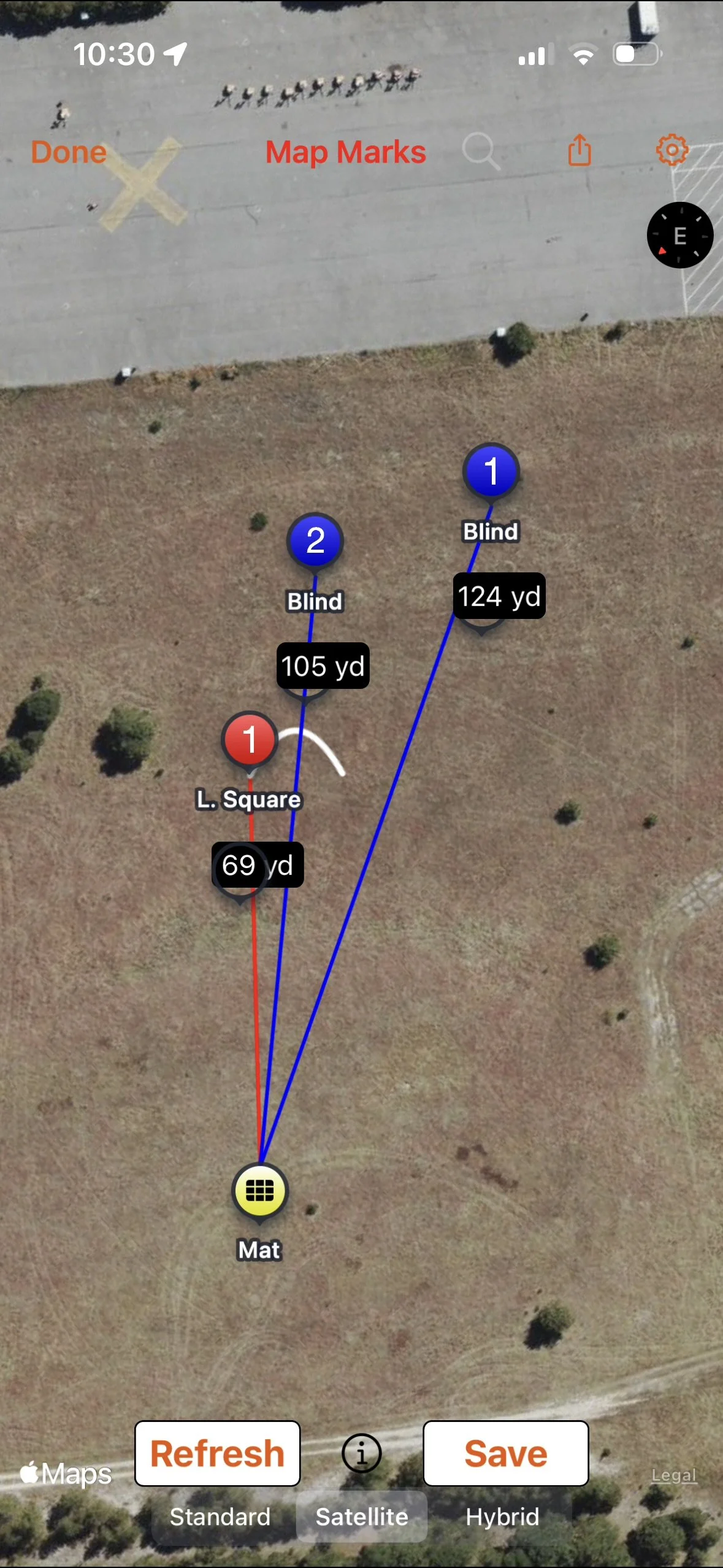
Setup (see attached image):
Red line: poison bird throw (visible mark at 69 yards to a large square area).
Blue lines: lines to the two blinds.
Blind 1 (124 yards) positioned past Blind 2 (105 yards).
Blind 1 filled with hen pheasants.
Blind 2 filled with drake mallards.
Wind blowing from left to right (from the temptation/poison bird across the line toward Blind 1), pulling dogs toward both the poison bird and Blind 2.
Execution:
Thrower throws the poison bird so the dog marks it but is not sent.
Send the dog on “back” to Blind 1 (first blue line, past Blind 2).
The dog must ignore the poison bird scent and commit to the handler’s line.
If the dog veers toward the poison bird or picks it up, immediately whistle sit the dog, walk out to the dog, remove the bird from their mouth, place it back at the pile, and from that point cast the dog to the desired "other" pile. Do not allow the dog to deliver the poison bird.
Repeat for Blind 2, but exercise caution — this is an “under the arc” setup where the poison bird is positioned directly in the dog’s path. Be prepared to whistle sit immediately and use the collar controller if the dog veers toward the temptation. Strong handler timing and readiness are essential to maintain commitment to the correct line.
Purpose
The drill “fills their faces full of smell” from the poison bird and the blinds, forcing the dog to handle off it and stay committed to the line. The first blind past the second adds memory and momentum challenges, while the wind (left to right) pushes scent across the path, increasing the temptation to drift toward the poison bird or Blind 2.
Results & Lessons Learned
We had mixed results — some dogs committed straight to the blinds without issue, others needed 2–3 handles to resist the poison scent. Everyone learned: the dogs sharpened their response to casts under distraction, and the handlers refined timing and pressure application. The caveat on wrong-bird retrieves (sit, walk out, remove, replace, cast) was key to avoiding frustration and reinforcing the correct line.
Field Transfer
Dogs that master poison bird drills arrive at tests with stronger line carry, better distraction resistance, and fewer cast refusals. They ignore old falls or diversions and stay committed to the handler’s direction — qualities that lead to higher scores and fewer faults in Qualifying, Amateur, and Open stakes.
Poison bird drills are advanced, so build a strong foundation first. Use them sparingly, with high success, and end on a strong rep.
If you run poison bird drills, what setup has given you the best results? Share in the comments or on Instagram (@flyinghighretrievers). We all learn from shared experience.
Here is to handling off distraction and straight lines,
Ryan Fisher
Owner and Team Development Officer
Flying High Retrievers
Long Island, New York
