The Power of Themed Training: Building Better Retrievers Through Focused, Consistent Sessions
At Flying High Retrievers, we believe that effective dog training is not about running random drills or hoping for improvement through repetition alone. True progress comes from deliberate, structured practice—something the most accomplished trainers in the retriever world have emphasized for decades. Trainers like Rex Carr, Mike Lardy, Dave Rorem, Pat Burns, and Bill Hillmann have long championed the value of themed training sessions: organizing each day’s work around one or two clear, reinforcing concepts that build upon one another over time.
This past weekend provided a perfect illustration. We ran two distinct setups on our water training grounds. Each day followed a deliberate primary theme, with the majority of marks or blinds aligned to that focus. A single “outlier” mark on each day supported a secondary objective that carried through both sessions. The result? Clear skill development without confusion, exactly as the pros recommend.
Why Themed Training Matters
Random training—switching between unrelated marks, blinds, and concepts from one throw to the next—rarely produces lasting results. Dogs learn best through repetition and clarity. When every element of a session reinforces the same lesson, the dog quickly understands what is expected and begins to internalize the skill. As Mike Lardy often notes in his training materials, consistency in presentation allows the dog to focus on mastering the concept rather than guessing what the handler wants. Rex Carr built entire training programs around progressive, theme-driven setups that developed dogs methodically from basics to advanced field trial performance. Dave Rorem, Pat Burns, and Bill Hillmann echo this philosophy: structure creates confidence, and confidence creates reliability under pressure.
Themed sessions prevent the common pitfall of “training by accident.” Without a clear focus, handlers may inadvertently reinforce unwanted behaviors or fail to address weaknesses. A themed approach ensures every mark, every blind, and every correction advances the dog’s understanding.
This Weekend’s Themed Setups
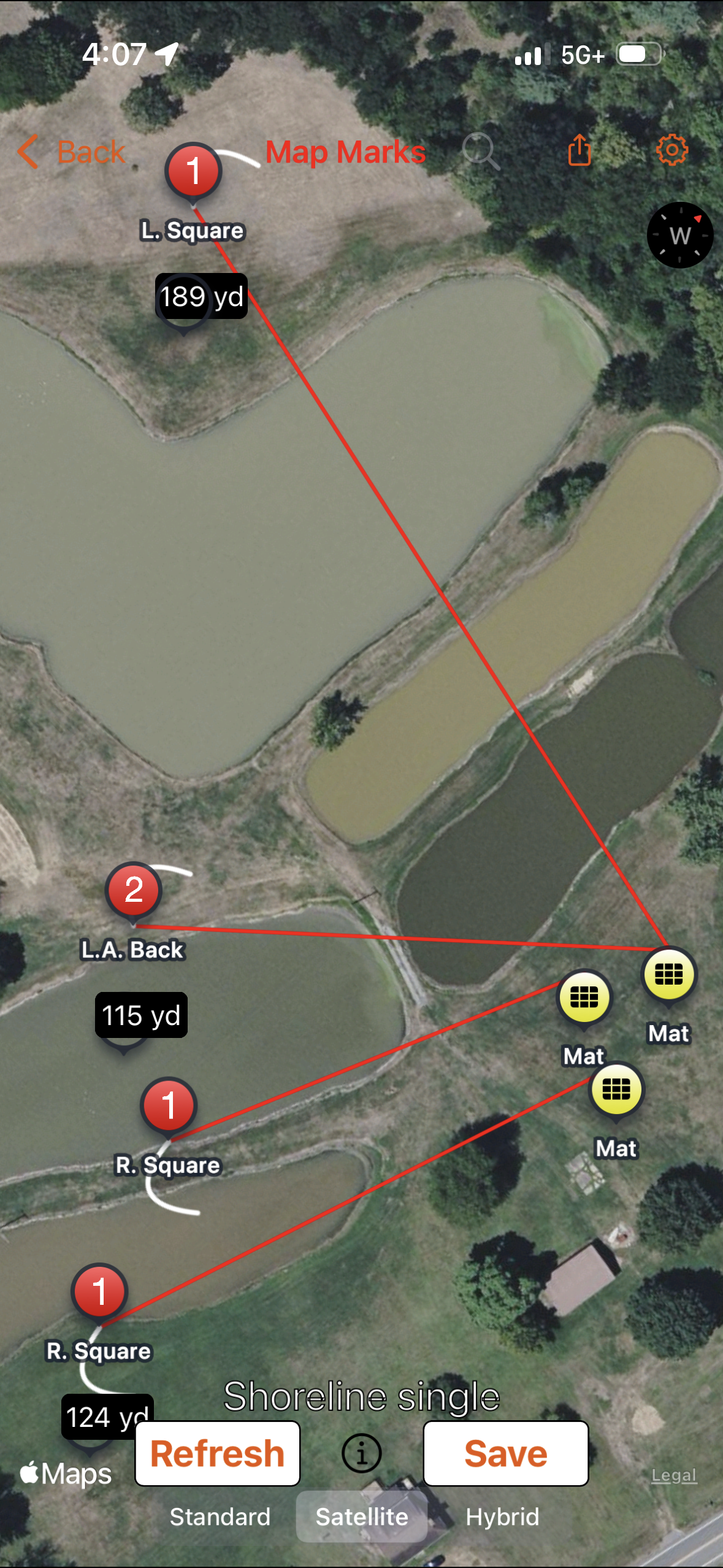
Day One – Focus on Cheating on Marks (Predominantly Red Lines) The setup emphasized proper marking and the importance of not cheating the cover or terrain. Most marks were thrown to require honest effort and straight-line commitment, discouraging shortcuts that often develop on marks near water or heavy cover. The single outlier mark reinforced a secondary (and ongoing) theme: building momentum through multiple pieces of water. This longer, more challenging retrieve encouraged the dog to maintain drive and focus while crossing successive water hazards—skills that translate directly to hunt-test and field-trial scenarios.
Day Two – Focus on Angle Entries and Exits on Water Blinds (Predominantly Blue Lines) Building directly on the momentum theme from Day One, the second session concentrated on precise angle entries and exits during water blinds. The majority of blinds were positioned to demand clean, controlled water work—teaching the dog to read the bank, maintain direction, and exit at the proper angle without banking or skipping water unnecessarily. Again, the single outlier mark reinforced the same momentum concept, allowing us to sneak in this third concept without polluting the focus of the primary themes on either day.
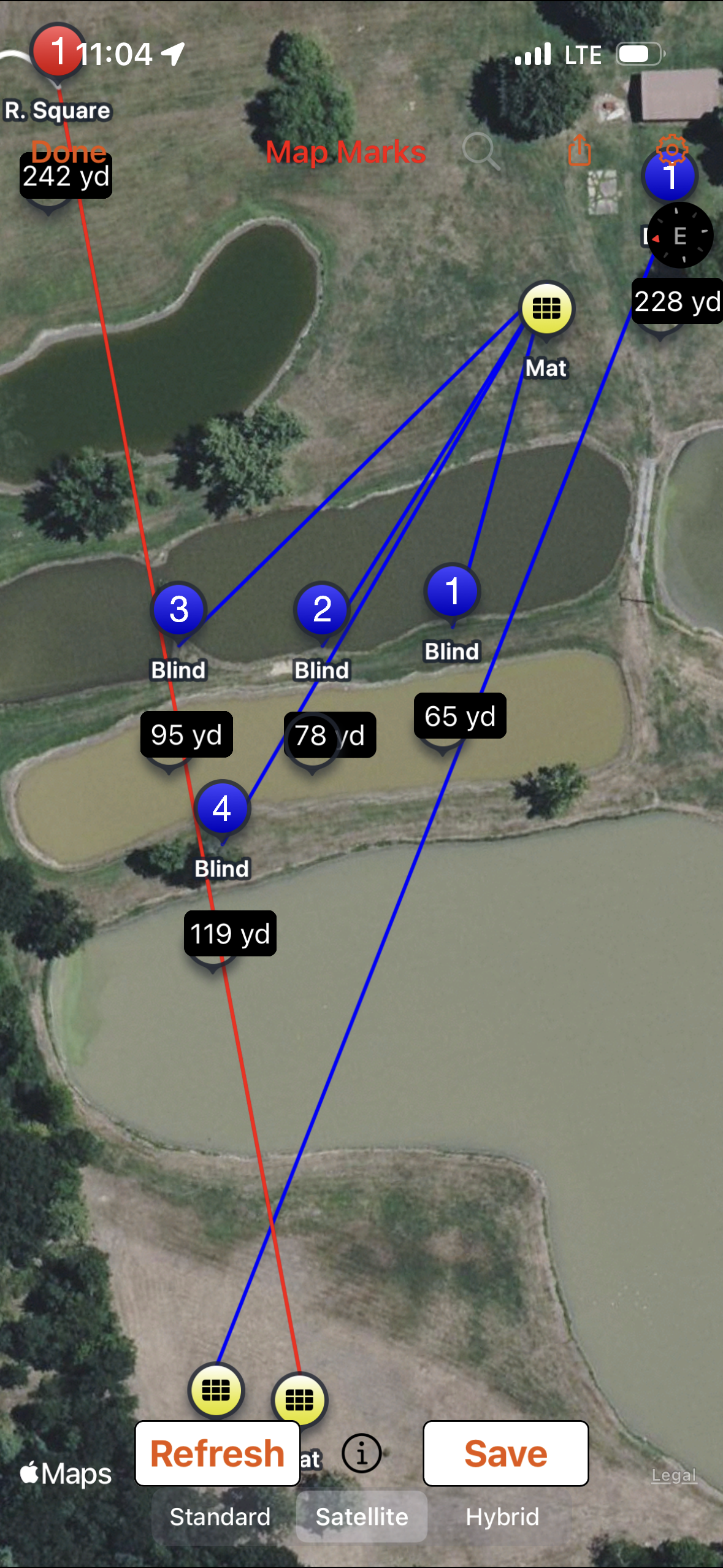
By keeping the core theme consistent within each day and linking the sessions through this carefully placed secondary concept, the dogs experienced clear progression rather than isolated exercises.
Practical Benefits Observed
Themed training delivers measurable advantages:
Faster learning curve — Dogs grasp the intended lesson more quickly when every retrieve reinforces it.
Stronger retention — Consistent repetition cements muscle memory and decision-making.
Reduced handler frustration — Clear objectives make it easier to read the dog, time corrections, and celebrate genuine breakthroughs.
Better transfer to competition — Skills practiced in context (water, cover, distance) translate more reliably to the field or test line.
This approach mirrors the systematic methods used by the legends of our sport. Whether you follow Mike Lardy’s Total Retriever Training philosophy, Rex Carr’s foundational principles, or the practical field wisdom of Dave Rorem, Pat Burns, and Bill Hillmann, the message is the same: thoughtful structure beats scattered effort every time.
How to Incorporate Themed Training Into Your Program
Choose one primary focus per session (e.g., honest marks, angle water entries, tight blinds, or momentum through cover).
Design 70-80 % of the retrieves around that theme.
Include one strategic outlier that gently supports a secondary or bridging objective.
Review and adjust daily based on what the dog showed you the day before.
Document your setups (maps, notes, or photos) so you can repeat successful themes and track progress over weeks and months.
At Flying High Retrievers, we apply this philosophy to every dog we train—whether it is a young prospect like Echo working on her first advanced water techniques or a seasoned competitor sharpening for the next trial season.
We invite you to try themed training in your own backyard or training grounds. The difference is remarkable.
What is the focus of your next training session? Share your theme in the comments below—we read every one and often feature reader setups in future posts.
Here is to training smarter together,
Ryan Fisher
Founder & Lead Trainer
Flying High Retrievers
Long Island, New York
Satellite views of this weekend’s setups (red-line Day 1 and blue-line Day 2) are included above for reference.
