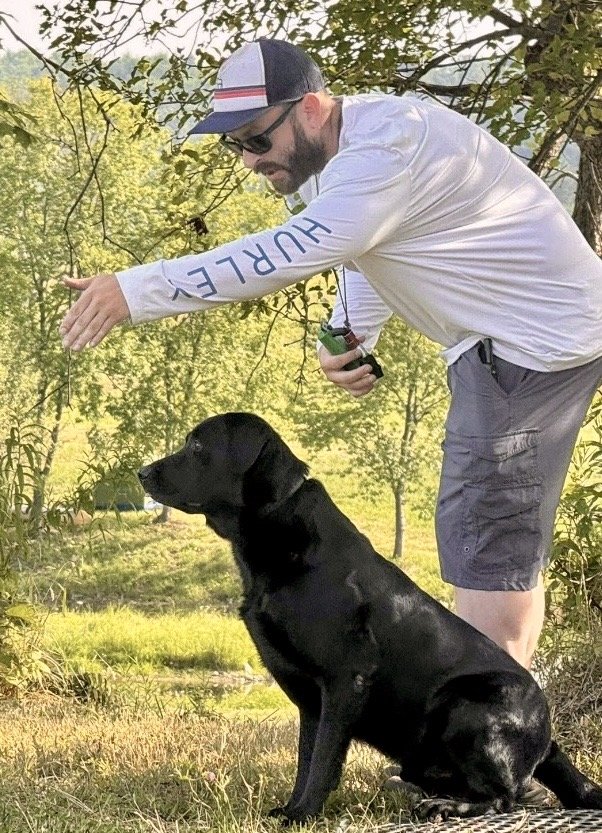
Reading Your Retriever: Mastering Nonverbal Cues at the Line for Better Marks
Hello, retriever enthusiasts! Welcome back to the Flying High Retrievers blog. After our deep dive into line mechanics, covering energy management, manners, wagon wheel drills, and send cues, we are shifting focus to a skill that elevates everything: reading your dog. At the line, understanding your retriever's nonverbal signals can make the difference between a clean retrieve and a frustrating overrun or switch. This isn't just about watching falls; it's about tuning into what your dog sees, processes, and remembers. Today, we emphasize one core principle: when birds are falling, watch the dog, not the birds.
Why Reading the Dog Matters
In the chaos of a hunt test or field trial, multiple marks demand split-second decisions. Your dog isn't just reacting to the fall; they're building a mental map based on visuals, sounds, and scents. By reading their cues, you gauge their confidence, identify potential issues early, and adjust your handling. This builds partnership, your dog trusts you to guide, and you trust them to commit. Miss these signals, and you risk misalignment, poor memory, or lost birds. Mastering this turns good runs into great ones, and it directly supports concepts like ideal selection and distance contrasts from our earlier posts.
Common mistakes? Handlers often stare at the birds, missing the dog's reaction. This leads to surprises on the send, like the dog veering off because they never fully locked on a mark. Prioritizing your dog's perspective over your own view ensures you're handling based on their understanding, not assumptions. This skill also extends to training setups, where reading cues helps refine drills and prevent bad habits from forming.
Watch the Dog, Not the Birds
Here's the golden rule: as birds fall, keep your eyes on your dog. The only exception is the flyer, where a quick glance confirms the live bird's path since its erratic flight can confuse even seasoned retrievers. For dead birds or bumpers, resist the urge to track them yourself. Why? It's more important to understand what the dog saw and comprehends than to see a dead bird drop. Your dog's head position, body language, and focus reveal if they've locked on, missed a mark, or gotten distracted.
This approach lets you catch subtle problems in real time. For instance, if the dog doesn't fully turn to a retired gunner, you know that memory might fade fast, cueing a stronger reinforcement later. Practice this in low-stakes drills to build the habit, starting with singles and scaling to triples.
Importantly, these cues aren't limited to the fall itself. Use them when showing the bird before the throw or shot—lining the dog up to each gunner station. This pre-fall observation confirms the dog registers the setup, allowing early adjustments if focus wavers.
Key Nonverbal Cues to Monitor
Focus on these signals during both the showing phase and as birds fall:
Ears Pointing: Forward-pricked ears signal locked-in attention on a gunner or falling bird. If they swivel or flatten during showing, the dog might not be fully engaged—realign with a quiet "there" or pivot.
Big Deep Breath: A noticeable inhale often means the dog is committing the mark or gunner to memory. Spot this after showing a station or during a fall; absence might indicate overload, prompting simplification.
Head and Eye Tracking: Steady head turns should follow each gunner during showing and track falls without breaking sit. Jerky movements or lost focus during showing suggest confusion—use "heel" or "here" to recenter.
Body Tension: A taut, forward-leaning stance (while maintaining sit) shows eagerness; slouching or shifting during showing or falls hints at disengagement—boost with subtle praise.
Mouth and Breathing: Closed mouth with steady breaths equals composure; panting or lip-licking during showing could signal stress—adjust your energy or environment to calm them.
Eye Dilation or Squint: Wider eyes indicate high alert (good for locking on), while squinting might mean uncertainty—note this especially when showing distant gunners.
By layering these, you build a full picture. For example, ears forward plus a deep breath on the long mark? They're solid. No breath and shifting eyes on the short retired? Plan an "easy" cue to reinforce.
Practical Tips for Building This Skill
Start simple: In drills with singles, practice watching only your dog during showing and the throw. Note cues and correlate with retrieve success. Progress to doubles or triples, always prioritizing observation over the action.
Incorporate into wagon wheel: As you line up, read the dog's focus before sending on "back." If cues show hesitation, microadjust with "heel" or "here."
Tie it to real scenarios: In a triple with a flyer, glance at the live bird but snap back to your dog for the rest. During showing, scan cues station by station to ensure comprehension.
Avoid pitfalls: Don't overreact to cues; use them to inform, not interrupt. Video sessions to review your reads against outcomes. And remember, this skill grows with consistency, just like force-fetch or blinds—pair it with varied environments to proof against distractions.
Wrapping It Up
Reading your retriever at the line isn't magic; it's observation honed through practice. Watch the dog, not the birds (except that flyer), and use those ears, breaths, and tensions to build unbreakable teamwork. Your runs will thank you with cleaner picks and fewer surprises. Stay tuned for tomorrow, where we'll explore microadjustments before sends, gunner recognition, target recognition, and their roles, plus why aiming "under the arc" beats a direct line every time.
Questions or experiences to share? Leave a comment below or message us on Instagram @FlyingHighRetrievers. Training thrives through collaboration!
Get Ready to Soar,
The Flying High Retrievers Team